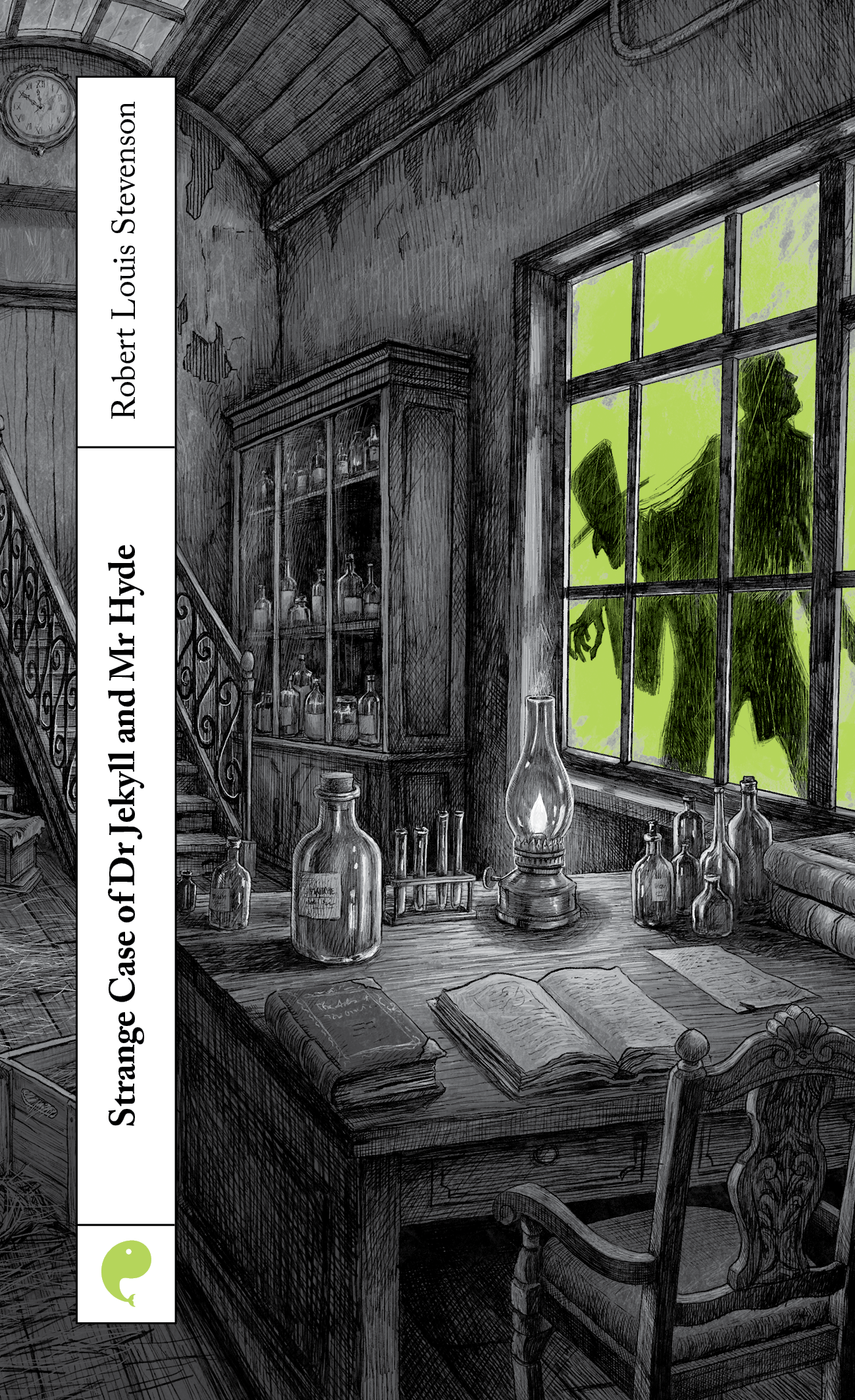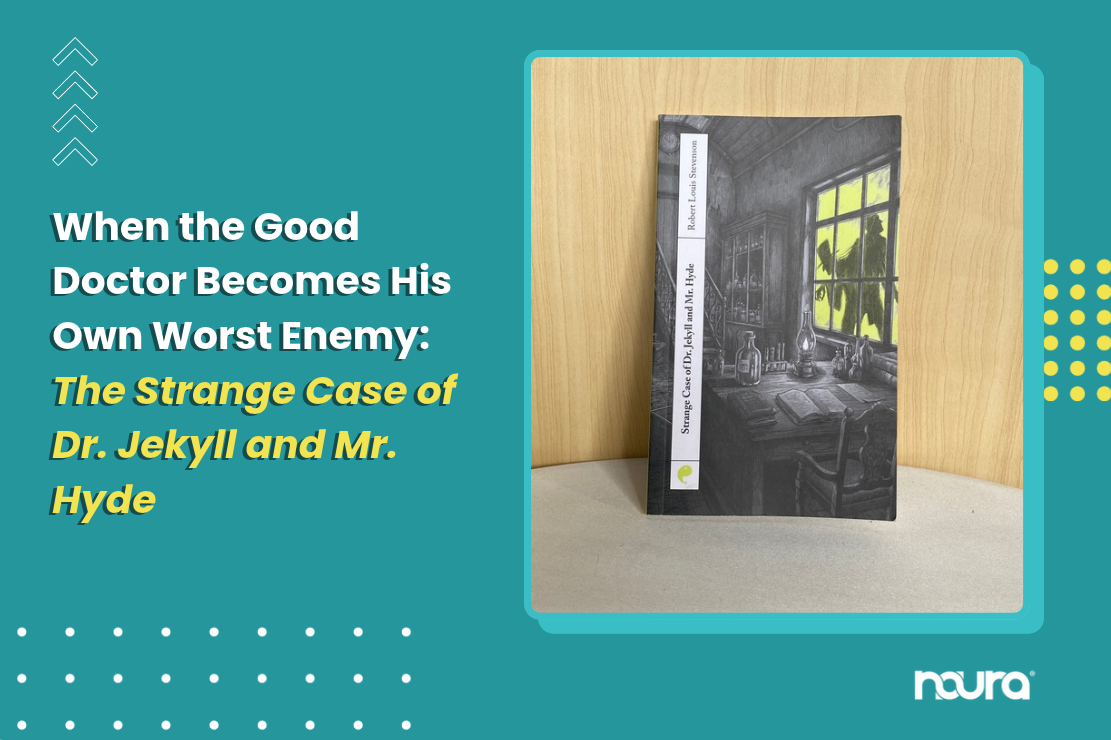
The name Dr. Jekyll and Mr. Hyde is probably familiar even to readers who have never picked up Robert Louis Stevenson’s classic.
First published in 1886, The Strange Case of Dr. Jekyll and Mr. Hyde has become one of Gothic literature’s most recognizable works. The story follows Dr. Henry Jekyll, a respected doctor who becomes fascinated by the conflicting sides of human nature and attempts to separate good from evil through a dangerous experiment.
His experiment succeeds, but not quite in the way he expects.
Instead, Jekyll creates Edward Hyde, a mysterious and violent figure who allows him to experience a life free from the moral expectations attached to his respectable identity. What begins as an experiment gradually turns into something far more dangerous when Jekyll realizes that Hyde is becoming increasingly difficult to control.
So, what makes The Strange Case of Dr. Jekyll and Mr. Hyde such an enduring Gothic classic?
A Premise That Turns the Dark Side of Human Nature into a Nightmare
Imagine being able to separate every part of yourself that you consider good from everything you would rather hide. You could keep your respectable identity while giving your darker impulses a completely different form.
That is exactly what Dr. Henry Jekyll attempts to do.
Jekyll is a respected doctor who believes that human beings are made up of conflicting sides. He becomes determined to separate these opposing aspects through an experimental drug.
The experiment transforms him into Edward Hyde, a smaller and more sinister version of himself who is free from the social expectations and moral restraints that define Dr. Jekyll.
At first, Jekyll sees Hyde as a form of freedom. He can become Hyde whenever he wants to indulge in desires that he would never act upon as a respectable doctor, then return to his ordinary life without anyone knowing what happened.
But freedom does not last forever. The more Jekyll gives Hyde control, the harder it becomes for him to take it back.
The Monster Is Not a Stranger. He Is Part of Jekyll
One of the most unsettling things about The Strange Case of Dr. Jekyll and Mr. Hyde is that Hyde is not simply a monster.
He comes from Jekyll himself. Jekyll creates Hyde because he wants to separate the darker side of his personality from the respectable identity he presents to the world. At first, he believes that keeping the two identities separate will allow him to control both.
Instead, the experiment reveals just how closely the two sides are connected.
Jekyll can transform into Hyde by taking the drug, but eventually the transformations begin happening without his intention. The person he created to experience freedom becomes increasingly independent.
What started as an attempt to gain control over his own nature slowly becomes the reason he loses control completely. And that is where the horror of the story truly begins.
The monster Jekyll fears is also the part of himself he willingly released.
Baca juga: The Otherwhere Post: Bagaimana Gadis 18 Tahun Terjebak Antara Masa Lalu dan Sihir Masa Depan
The Mystery Unfolds Through Mr. Utterson
The story is not told entirely through Jekyll’s perspective. Much of the mystery develops through Mr. Gabriel John Utterson, a lawyer and one of Jekyll’s closest friends.
Utterson first becomes suspicious when he hears about Edward Hyde, a strange man with a disturbing reputation who seems to have an unusual connection to Jekyll.
Hyde’s name is linked to a disturbing incident involving a child, followed by a large payment to the child’s family.
What makes the situation even stranger is that the payment comes from Dr. Jekyll. Utterson then discovers that Jekyll’s will leaves his entire estate to Hyde.
Why would a respected doctor leave everything to a man with such a troubling reputation?
And what exactly is the relationship between the two men?
As Utterson begins investigating, more questions emerge. The mystery surrounding Hyde becomes increasingly difficult to separate from the life of Dr. Jekyll, eventually leading Utterson toward a secret far more disturbing than he could have imagined.
It Is More Than a Story About Good and Evil
It would be easy to describe The Strange Case of Dr. Jekyll and Mr. Hyde simply as a story about the battle between good and evil.
But the relationship between Jekyll and Hyde is much more complicated than that. Jekyll does not create Hyde because he suddenly decides that he wants to become evil. He creates him because he wants to experience a version of himself that is free from the expectations surrounding his respectable identity.
As Dr. Jekyll, he has a reputation to protect. As Mr. Hyde, he believes he can act without those same restrictions. But Stevenson gradually reveals the problem with trying to separate these two identities. Hyde is not completely separate from Jekyll. He is part of him.
The story therefore becomes a reflection on human nature, morality, desire, and the parts of ourselves we choose to reveal or conceal.
What happens when the version of ourselves that we keep hidden becomes impossible to control? That question remains at the heart of Jekyll and Hyde’s story.
Why Jekyll and Hyde Still Feels Familiar Today
More than a century after its publication, the names Jekyll and Hyde have become part of everyday language.
“Jekyll and Hyde” is now commonly used to describe someone who appears to have two dramatically different sides. The story itself has also been adapted more than 120 times across film, television, and stage productions.
But perhaps its lasting appeal comes from something much simpler. The idea of having different sides of ourselves is not difficult to understand.
There is the version of ourselves we show at work, the version we show our friends, and the parts of ourselves that we may prefer to keep private. Stevenson takes that familiar contradiction and pushes it to its darkest possible extreme.
What if the side of yourself that you hide could become another person?
What if you could no longer decide when that person appeared?
And what if the person you were most afraid of was actually a part of you all along?
That is what makes The Strange Case of Dr. Jekyll and Mr. Hyde more than a Gothic horror story. It is a story about what can happen when we try to escape the parts of ourselves we do not want to face.
Baca juga: Hotel Magnifique: Di Balik Keajaiban, Ada Kontrak yang Tak Bisa Dipatahkan
Meet The Strange Case of Dr. Jekyll and Mr. Hyde from Poise Press
For readers who want to revisit one of the most enduring Gothic classics in English literature, The Strange Case of Dr. Jekyll and Mr. Hyde offers a story filled with mystery, psychological horror, supernatural elements, and questions about human nature.
In the Poise Press edition, Robert Louis Stevenson’s classic comes in a compact 124-page edition, making it an accessible way to discover the story behind one of literature’s most recognizable names.
Whether you already know Jekyll and Hyde from their many adaptations or are encountering Stevenson’s original story for the first time, this classic offers something more unsettling than a simple tale of a good doctor and an evil alter ego.
It asks us to look at the person behind the monster. And perhaps, a little uncomfortably, at ourselves.
Ready to meet Mr. Hyde?
Discover The Strange Case of Dr. Jekyll and Mr. Hyde by Robert Louis Stevenson, published by Poise Press.
Beli bukunya di sini